
DDCBGF-400-E 40 Ton Electric Pass-Through Car Bottom Furnace with Two Guillotine Doors
- Brand: OEM FURNACE
- Product Code: DDCBGF-400-E
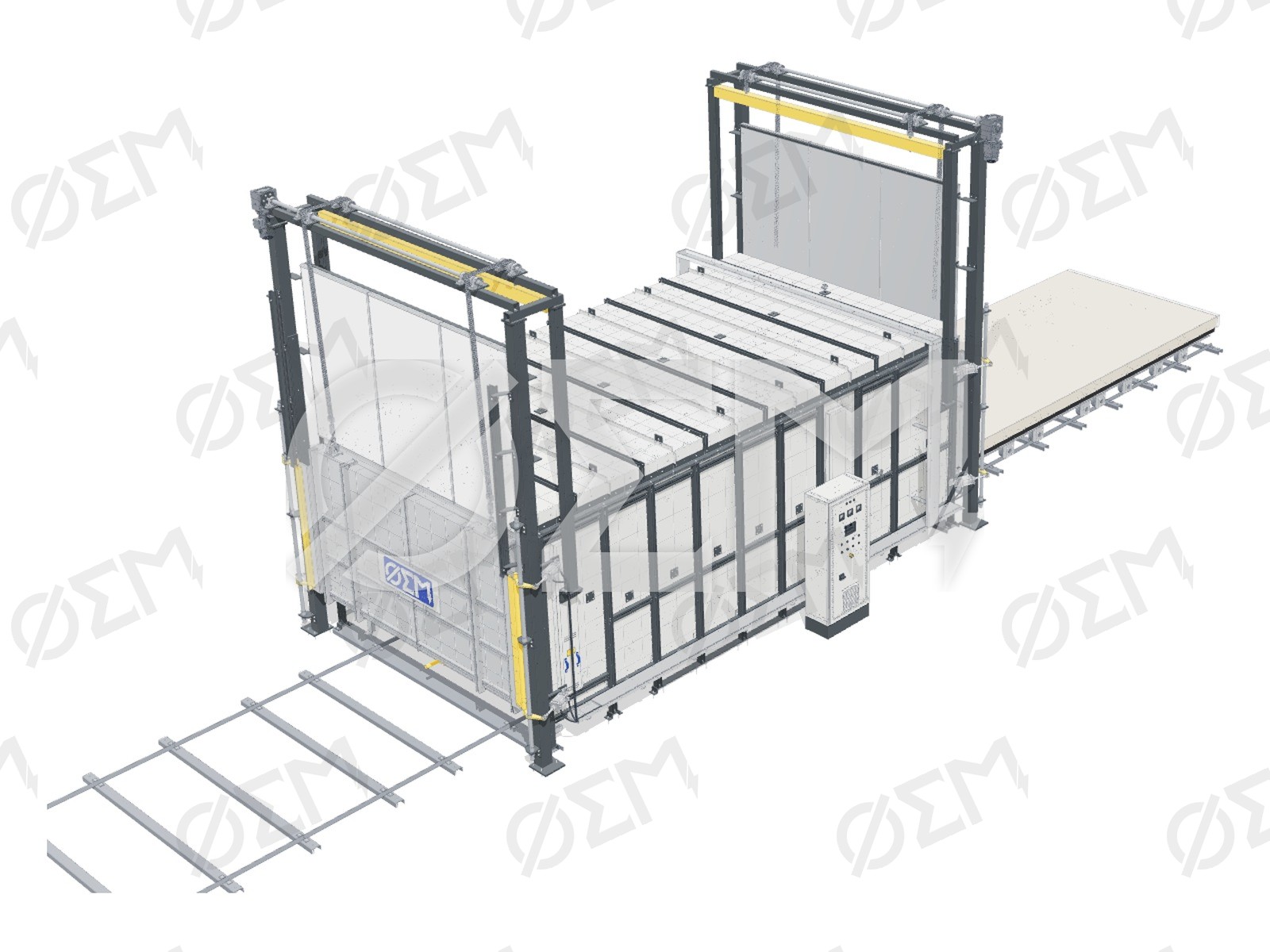
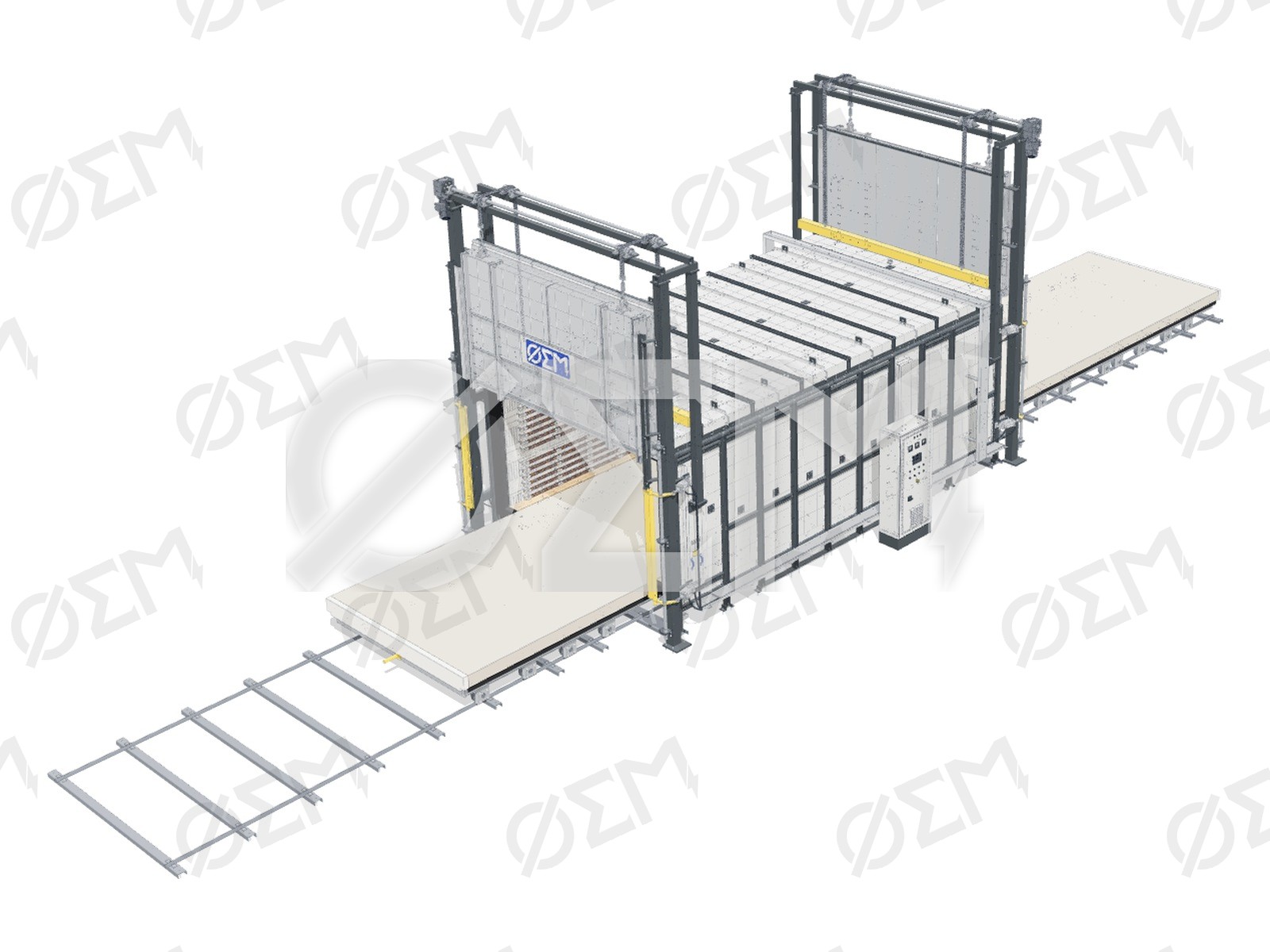
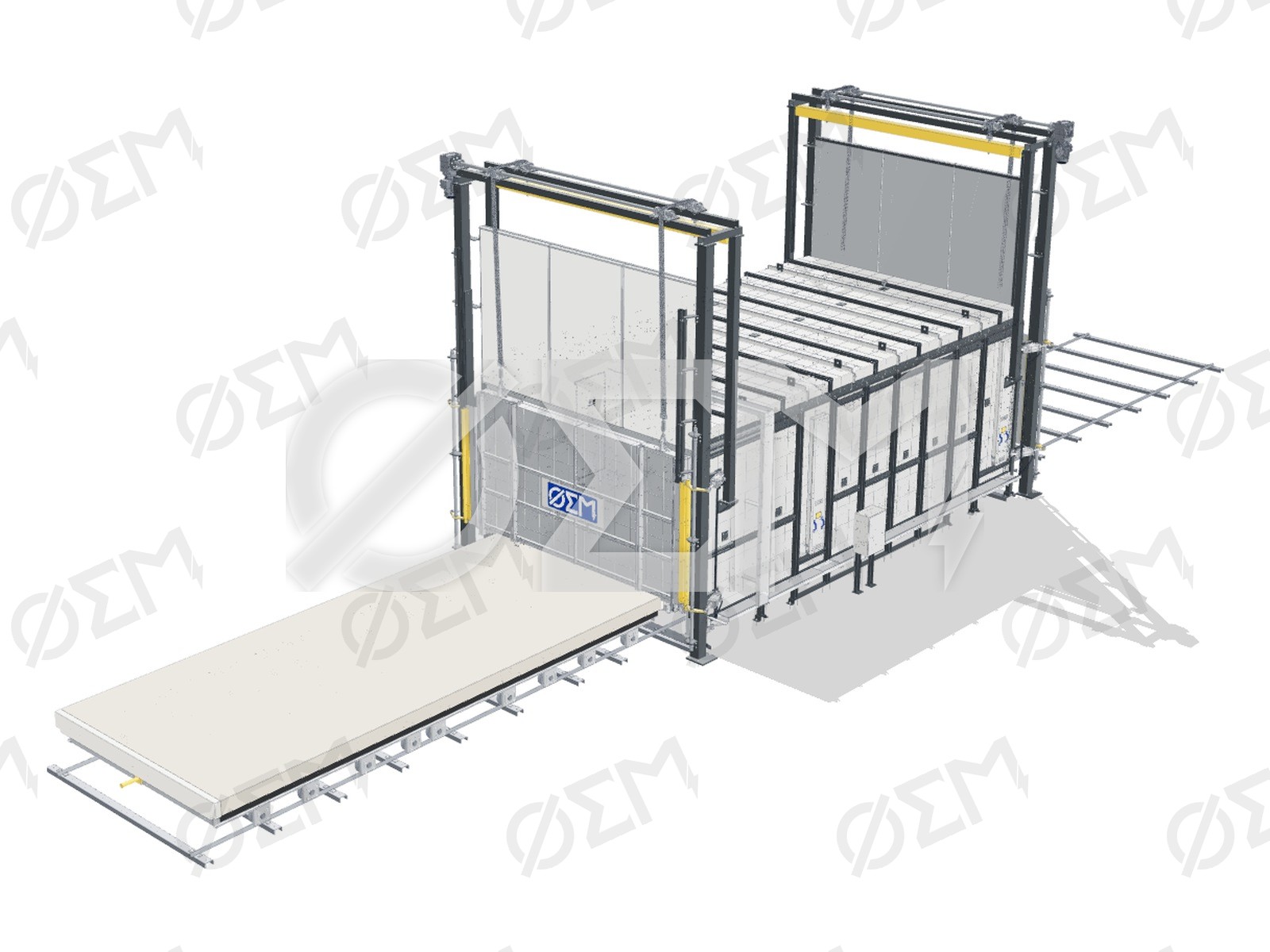
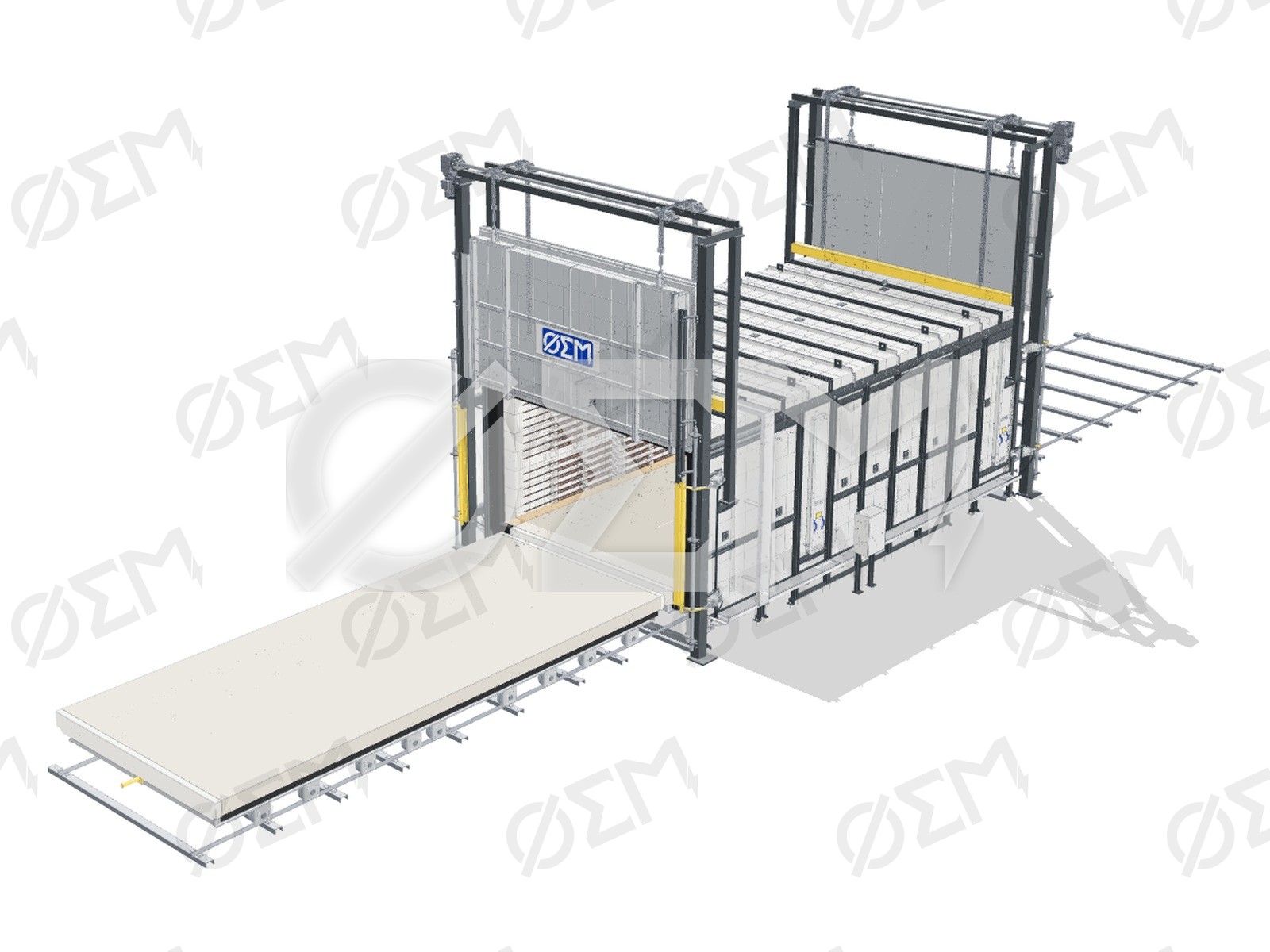
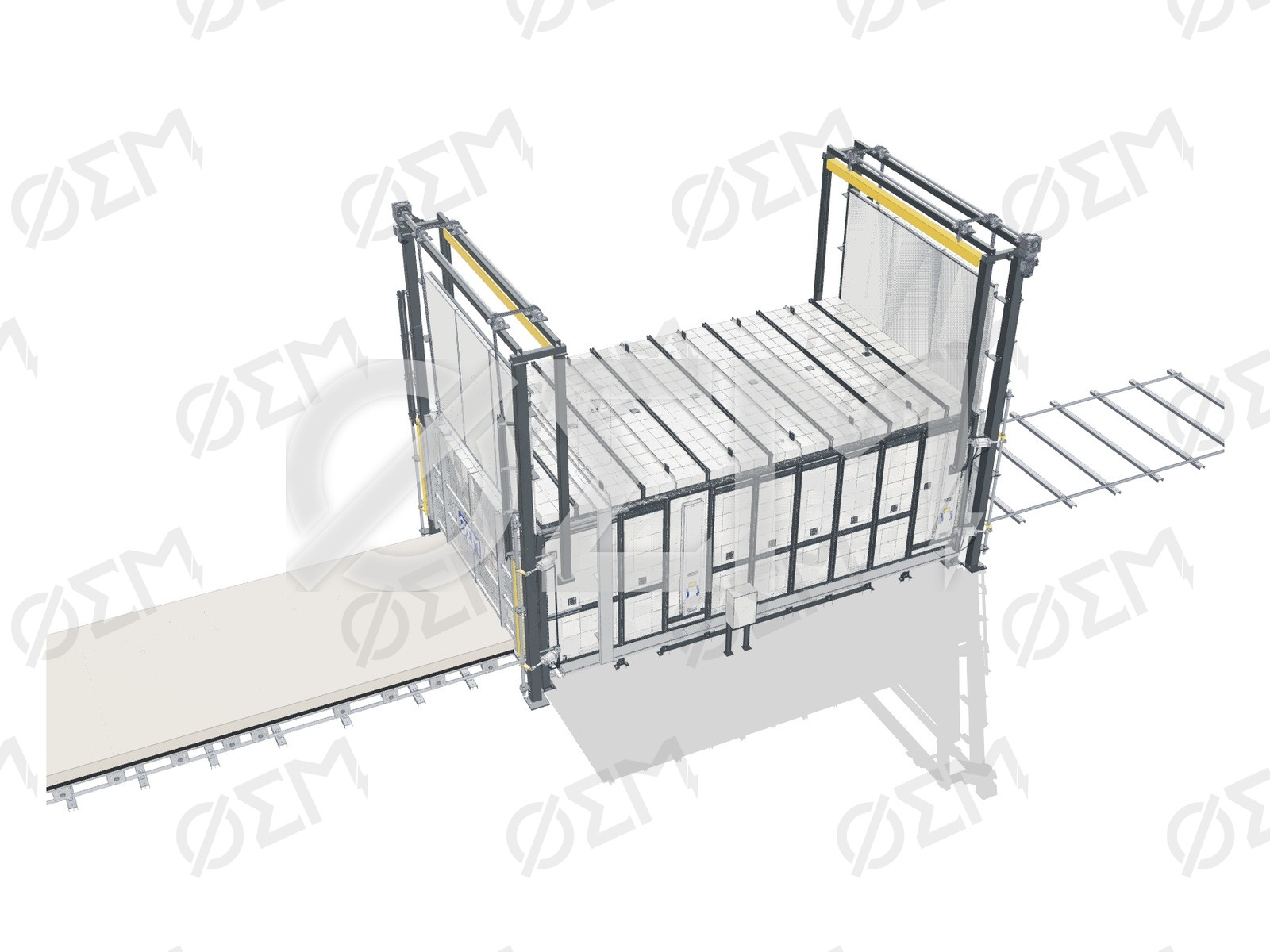
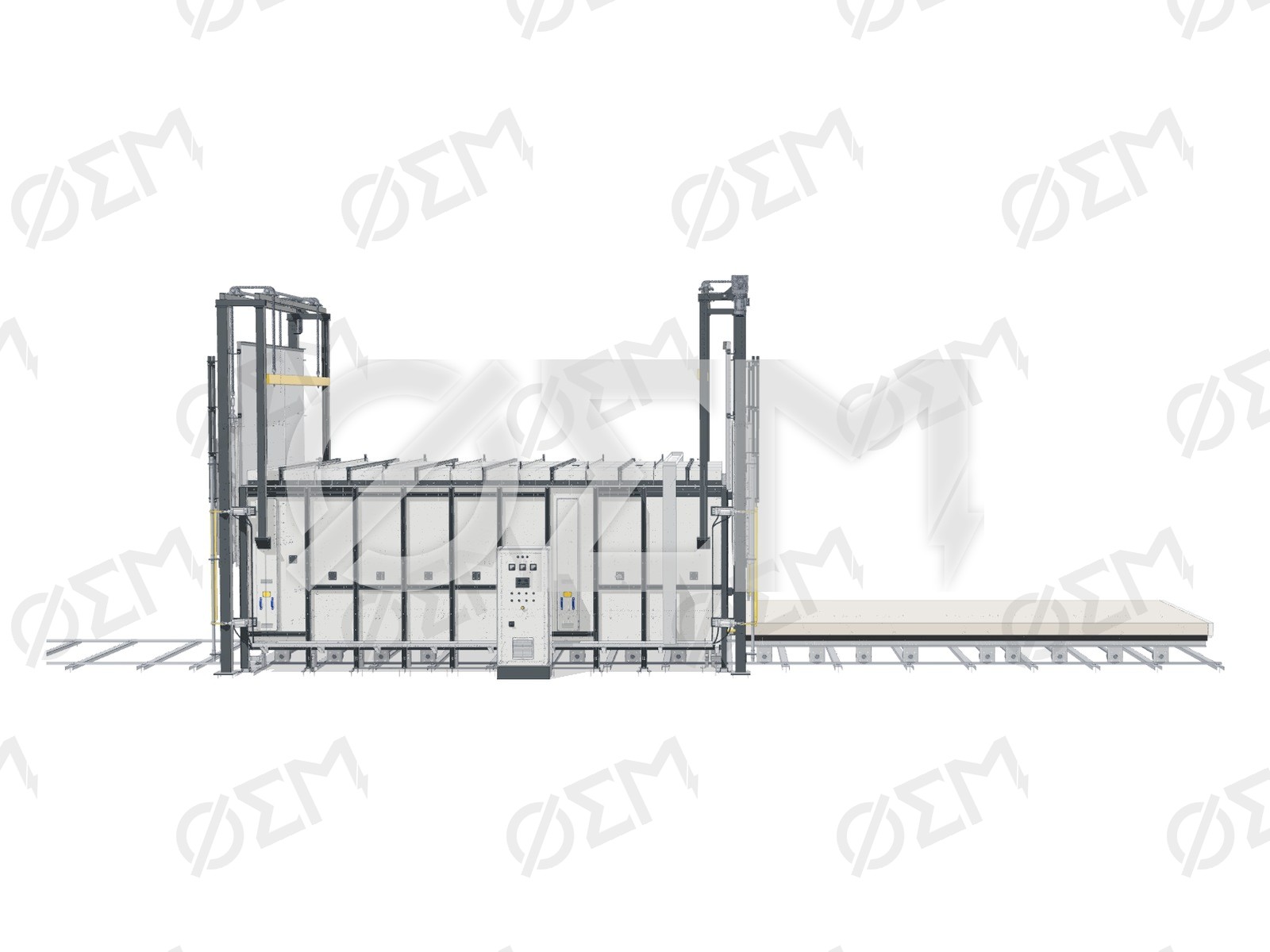
DDCBGF-400-E is an electrically heated pass-through car bottom (bogie hearth) furnace with a guillotine door at each end and a maximum charge of 40 t. Body, car, heating and insulation are the same as CBGF-400-E; in place of the rear wall there is a second guillotine door identical to the front one. The car can enter and leave from either side: the load can be charged at one end and taken out at the other after treatment, or two cars can work in turn from the two ends. It is designed for stress relieving, tempering, annealing and normalising up to 950 °C, and suits lines where charging and discharging take place in different areas, or furnaces standing between two bays.
Ceramic fibre module insulation
Walls and roof are lined with 250 mm Z-block ceramic fibre modules. The light lining stores little heat, so the furnace heats up and cools down quickly and uses less energy per cycle.
Heating layout
FeCrAl spiral elements on ceramic tubes hang on support bricks along the side walls in rows 120 mm apart. Each row is wound from a single wire. As the rear end is also a door, all heating circuits are on the side walls. A firebrick ledge at the foot of the walls protects the elements during loading. In this size each row carries 3 circuits, brought out to intermediate terminal boxes on the side wall.
Car and sand seal
The car has a monolithic cast refractory hearth on a steel frame and runs on 9 axles with Ø250 wheels on rails set into the floor. The car is sealed to the body by a sand knife on the car edge dipping into a sand trough on the body. The car has a towing eye at each end and can be pulled either way; the rails run out on both sides of the furnace and are bolted to sleepers embedded in the floor.
Two guillotine doors
Both ends carry the same door group: tower, drive, counterweight, pneumatic clamping and radiation screen are identical front and rear, with common parts. Each door lifts vertically by 2,300 mm in its own steel tower, driven by a 2.2 kW bevel-helical geared motor, a lifting shaft and two 16B-2 duplex chains. The gear unit is held by a torque arm. A one-piece beam counterweight (≈680 kg, ≈91% of the ≈743 kg door) balances the door, so the motor stays small and the door holds in any position. The counterweight runs on rollers in guides on the rear tower posts.
Pneumatic clamping
While lifting, the door hangs clear of the seal frame, so the seal is not rubbed. When the door is down, two pneumatic cylinders per side push the whole door forward through rotating arms and press it onto the seal; they pull it back before opening. As the door comes down, its guide tongue enters the shoe by itself through a funnel-mouthed rail.
Radiation screen
With the door open, a ceramic-fibre-insulated radiation screen shields the area above the opening and the roof front, keeping hot air and radiation away from the tower and drive.
Bolted, easy-to-service design
The casing is built from formed steel sections, bolted together; welding is used only where needed. Parts can be removed and refitted, which makes maintenance and later options easy. The control panel stands beside the furnace. As the car path is open at both ends, cables cross to the other side through a bridge tray over the roof; the pneumatic valves for both doors are grouped in a floor-standing valve box on the side opposite the panel.
Technical data
| Product code | DDCBGF-400-E (Double Door Car Bottom Guillotine Furnace, Electric) |
|---|---|
| Max. charge | 40 t |
| Usable size (W × L × H) | 3,000 × 6,500 × 2,000 mm |
| Usable volume | 39 m³ |
| Chamber (W × L × H) | 3,600 × 6,930 × 2,200 mm |
| Max. operating temperature | 950 °C |
| Installed power | 526.5 kW, 3-phase 380–400 V 50 Hz |
| Line current | ≈760 A |
| Heating | 15 rows × 3 circuits = 45 circuits, FeCrAl spirals (Ø4 mm wire) |
| Heating rate (calculated, max. charge) | ≈63 °C/h |
| Insulation | Walls and roof 250 mm Z-block ceramic fibre modules |
| Car | Cast refractory hearth, 9 axles, Ø250 wheels |
| Car travel / rail length | Car exits in both directions; rails run out on both sides |
| Sealing | Sand seal (sand knife on car, sand trough on body) |
| Door | 2 × guillotine (front and rear), 2,300 mm vertical lift · 2.2 kW geared motor + 2 × 16B-2 chain + counterweight · pneumatic clamping (2 cylinders per side) |
| Cables and pneumatics | Bridge cable tray over the roof; valves for both doors in a floor-standing valve box |
| Overall size (W × L × H) | 5,670 × 8,570 × 6,240 mm (incl. both towers, excl. rails) |
| Weight (approx.) | ≈29,984 kg (incl. refractory, insulation and heating; excl. charge) |
We manufacture the furnace together with the body, car, rails, heating elements and control panel, and install and commission it on site. Other sizes, a gas-fired (process burner) version and options such as a circulation fan are discussed at quotation stage.
For price and lead time, use the Request a Quote button or call +90 533 945 27 94.
Tags: DDCBGF-400-E, pass-through furnace, double door furnace, two guillotine doors, car bottom furnace, bogie hearth furnace, 40 t car bottom furnace, stress relieving furnace