Electric or Gas-Fired? 7 Criteria for Choosing an Aluminium Melting Furnace
By OEM FURNACE Mühendislik - 30/09/2025 - 0 comments
One of the first questions when buying an aluminium melting furnace is the energy source: electric or natural gas? Both can be the right answer. The decision depends on your production pattern, site infrastructure and energy prices. These seven criteria will help you clarify your own answer before requesting a quotation.
1. How much and how often will you melt?
Daily melt volume and shift pattern are the basis of the choice. Continuous lines that need a high hourly melt rate benefit from the fast heat-up and high power of gas-fired furnaces. Smaller batches, holding-heavy operation or castings that need precise temperature favour electric furnaces.
2. Is your energy infrastructure sufficient?
An electric furnace needs enough transformer capacity and suitable cabling; an 800 kg electric crucible furnace, for example, requires a connected load of around 100 kW. A gas-fired furnace needs a gas line with the right pressure and flow, approval from the gas utility and a flue/exhaust arrangement. The cost of upgrading existing infrastructure can decide the matter on its own.
3. Energy cost per kilogram
The theoretical energy needed to bring aluminium from room temperature to a pouring temperature of about 720 °C is roughly 0.3 kWh/kg. Real consumption is several times higher depending on furnace type, insulation, lid use and holding time. Electric furnaces generate heat inside the furnace and are therefore efficient; gas furnaces lose heat with the flue gas, but gas is usually cheaper per kWh. Compare by calculating “cost per kg of aluminium” with your own electricity and gas tariffs.
4. Metal quality
In electric furnaces, combustion products do not touch the melt, which helps reduce dross formation and hydrogen pick-up. In gas furnaces the flame atmosphere can increase oxidation somewhat; correct burner tuning and lid use keep this under control.
5. Temperature accuracy
Electric heating with PID control and thyristor or contactor switching makes it easy to hold a narrow temperature band — a real advantage for temperature-sensitive processes such as die casting or gravity casting.
6. Working environment and emissions
Electric furnaces are quieter, need no flue and radiate less heat into the shop. With gas furnaces, safe exhaust removal and ventilation are part of the design.
7. Maintenance and spare parts
The main maintenance items on electric furnaces are heating elements, connections and thermocouples. Gas furnaces need regular checks of the burner, flame safeguard, gas valve train and fan. For both, the crucible and refractory condition are the most critical points.
In short
- Electric: precise temperature, cleaner metal, quiet shop, easy installation (if transformer capacity allows).
- Gas: high melt rate, large capacities, often lower energy unit price.
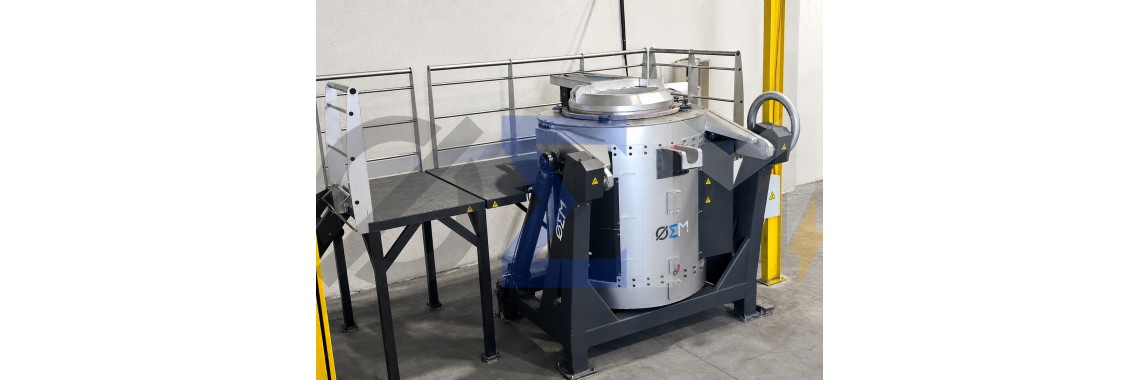
OEM FURNACE melting furnaces are designed from 150 kg to 24 tonnes in both electric (E) and gas-fired (G) versions.
Let us help you choose the right furnace. Send us your capacity, alloy and energy supply and we will prepare a clear, itemised quotation: talep@oemfurnace.com.tr · +90 533 945 27 94
Tags: aluminium melting furnace, electric furnace, gas-fired furnace, furnace selection
Comments
Write a comment